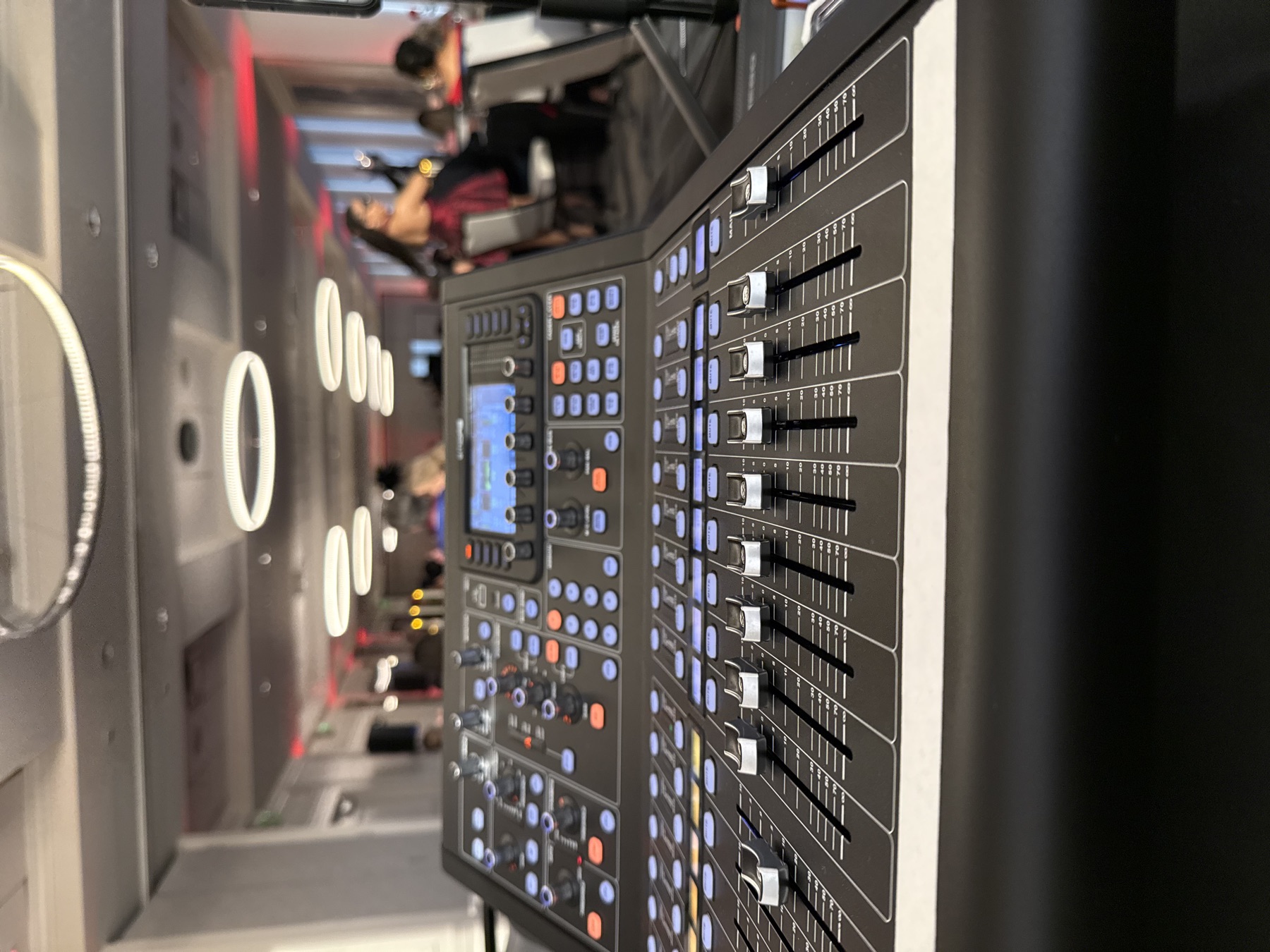
The financial case for an annual AV service contract is straightforward — but most venue owners run the math wrong. They compare contract cost to "what we'd pay for repairs" instead of "what one mid-event failure actually costs us."
Here's the real calculation.
What preventive maintenance actually covers
A real annual maintenance program includes:
- Quarterly site visits with documented checklist
- Firmware updates across DSP, control, switcher, displays
- Calibration — audio levels, video color, RF coordination
- Predictive failure detection — projectors near end-of-life, batteries near replacement, fans showing increased current draw
- Documentation maintenance — system docs updated as the room evolves
- Training refresher — quarterly 30-min refresh for banquet/AV team
Cost of a single mid-event failure
The hidden cost most venues never run:
| Failure mode | Direct cost | Indirect cost |
|---|---|---|
| Audio fails during keynote | $25-50K refund/comp | $50-150K reputation hit (lost future bookings) |
| Projector dies during Q&A | $10-25K refund/comp | $30-80K reputation hit |
| Stream crashes during earnings call | $50-150K refund/comp | $150-500K reputation hit (Fortune 500 reputation) |
| Wireless mic dies during toast | $5-15K refund | $20-50K reputation hit (wedding-vertical) |
Average mid-event failure: $45-130K total cost when you include reputation impact.
Annual maintenance contract cost
Typical pricing depending on system size:
- Single conference room install: $1,500-3,000/year
- Boardroom (premium): $4,000-8,000/year
- Hotel ballroom (mid-tier): $15,000-30,000/year
- Hotel ballroom (premium): $30,000-60,000/year
- Multi-property hotel chain: $60,000-200,000/year
Compare contract cost to failure cost. Even ONE prevented failure pays back 3-5 years of contract cost.
The data behind preventive maintenance
A managed system catches roughly 80% of failures before they happen at an event. The 20% that get through are usually unpredictable hardware death (sudden) rather than degradation (slow).
The catch rate breakdown:
- DSP firmware bugs — 100% catchable via firmware updates
- Battery failures — 95% catchable via age + voltage monitoring
- Cable failures — 70% catchable via routine inspection
- Projector lamp end-of-life — 90% catchable via hour tracking
- Network issues — 85% catchable via continuous monitoring
- Sudden hardware death — 10% catchable (often unpredictable)
Service contract structures
Three common structures, ranked by venue size:
Pay-per-call (cheapest, riskiest)
- $150-250/hour rates
- $500-1,500 dispatch fee per visit
- No SLA guarantees
- Best for: Single conference rooms, low-utilization spaces
Annual flat-rate (recommended)
- Quarterly preventive maintenance
- Defined SLA for emergency response (typical: 4-hour response, 8-hour on-site)
- Firmware + calibration included
- Best for: Hotels with 50+ events/year, multi-property chains, mission-critical install
Premium / SLA-tiered (largest deployments)
- 24/7 remote monitoring
- 2-hour emergency response SLA
- Hot-spare gear staged at venue
- Dedicated account engineer
- Best for: Broadcast facilities, mission-critical corporate, multi-property chains
Multi-site service contract economics
For multi-property hotel chains or restaurant groups, single-site math doesn't apply — you get scale benefits:
- Centralized monitoring across all sites = one alert dashboard
- Pooled gear inventory = faster swap-outs
- Standardized firmware = batch deployments instead of per-site
- Bulk pricing on emergency dispatch
A 10-property hotel chain with $300K of annual AV maintenance is typically equivalent to $400-500K of per-property contracts — a 25% savings.
How to size your contract
Three questions:
- What's the cost of a single mid-event failure? (Add up direct + reputation cost)
- What's our event volume? (More events = more failure exposure)
- What's the asset value? (More gear = more maintenance burden)
Match contract tier to event volume:
- Under 50 events/year: pay-per-call probably fine
- 50-150 events/year: annual flat-rate makes sense
- 150-500 events/year: premium SLA-tier worth it
- 500+ events/year: dedicated account engineer
What good service contracts include
Real contracts you should look for:
- Quarterly preventive maintenance with documented checklist
- 24/7 remote monitoring for critical systems
- Defined SLA (response + on-site times in writing)
- Firmware updates included
- Hot-spare gear available within agreed SLA
- Emergency dispatch via single phone number
- Quarterly business review with the venue ops team
- Annual contract review + renewal terms
What to avoid:
- "Best effort" language without SLAs
- Hourly rates per occurrence buried in fine print
- No remote monitoring component
- Tied to specific hardware brand (rebate distortion)
How we structure service contracts
Disclosure: we do AV install + service across hotels, restaurants, conference rooms, and worship spaces. Our service contracts are typically:
- Quarterly preventive maintenance with documented checklist
- 24/7 remote monitoring (optional but recommended)
- 4-hour emergency response SLA, 8-hour on-site
- Firmware + calibration included
- Hot-spare gear available
- One PM owning the relationship
Contracts price 3-5% of original install cost annually for our typical deployments.
If your venue is paying for AV repairs ad-hoc and considering a real maintenance program, send us your install spec and event volume — we'll send back a contract proposal sized to your actual operation.
📞 (407) 885-5770 · 📧 info@axiosprosolutions.com
Have a project that fits this topic?
Skip the article — talk to the team that writes them. We get back to you fast, often within the hour.
Related reading
Other guides in this track.